INTRODUCTION
Photovoltaics is the process of conversion of sunlight into electric energy directly. This is a form of renewable form of energy and the most sought topic of research in today’s times. Earlier it was mainly concerned with powering satellites which are standalone in the space with no grid connectivity. But today efforts are going all around the world to harness solar energy enough to make it a substitute of thermal powered energy. This is a great push in the direction of curbing pollution. Scientists and engineers all around the world are working tirelessly to increase the efficiency of photo voltaic cells. In the year 1985 silicon cells achieved the 20 percent efficiency target. Solar cell efficiency refers to the portion of energy in the form of sunlight that can be converted via photovoltaics into electricity by the solar cell. The most efficient solar panels on the market today have efficiency ratings as high as 22.2%.
PHOTO VOLTAIC CELLS AS ENVIRONMENT SAVIOUR
Today we are dealing with the ill effects of environmental pollution. Climate change is no more a fantasy of future. Erratic behaviour of natural phenomena are being observed all around the word. Floods, forest fires, droughts, decreasing ground water level , unusual high temperatures, melting glaciers, the list is unending. Earth’s temperature equilibrium is maintained by the balance of incoming solar radiation and outgoing solar radiation from earth’s atmosphere. Many gases such as CO2 , Methane , etc form an envelope over earth thus reflecting back the solar radiations reflected from earth’s surface. This results in overall increase of earth’s temperature or global warming.
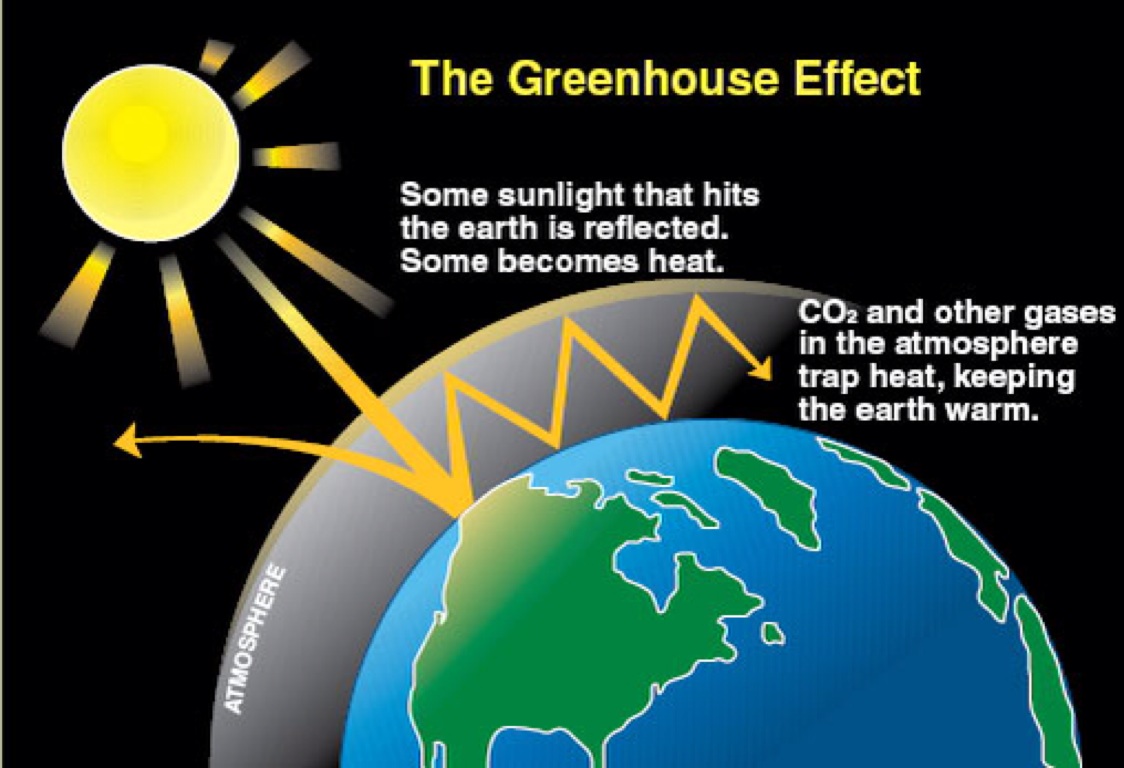
Thermal power plants and other anthropogenic activities involving burning of fossil fuels are increasing the amount of green house gases in atmosphere considerably. Using Photo Voltaic cells for producing electricity at commercial scale is one of the biggest remedy to climatic woes. But today we are still researching to get high efficiency solar cells.
BASIC SOLAR CELL WORKING
When P and N type materials are joined together and put in sunlight, excess electrons which are knocked out from N type materials cross the junctions and reach electron deficient P type material thus producing electricity. This electricity can be utilised directly or stored in batteries. The deficiency of electrons in P type material is also denoted as holes. If there is a single vacancy of electron then the material will be said to have a single hole.
Solar cells are made up of P-type and N-Type Silicon material joined together. Silicon is a semiconductor i.e. it possesses some qualities of metal and also electric insulator. Sunlight is composed of particles called photons, which when hit the silicon , transfer their energy to the free electrons of Si. These free electrons are knocked out of atom and they are responsible for production of electricity. But the story is told partially here. Electricity is produced with flow of electrons and thus these free electrons need to move to some electron deficient medium. For this a process is involved called ‘Doping’. In doping we mix impurities with pure Si in two forms : in one type of doping we increase the no of free electrons in Si and the Si so generated is ‘N’ type, in other we create the deficiency of electrons and its called P type Si. For N type a pentavalent material atoms are used as impurity whereas for P type trivalent material atom is used.

Multi Junction Solar Cell
Multi junction solar cells have different p-n junctions made up of different types of semiconductor material. Each p-n junction is responsive to particular wavelength in the electromagnetic spectrum of light . Thus it ensures greater part of sunlight is utilised in production of electricity.Single junction solar cells have theoretical efficiency of 33.16 percent whereas but practically we have the efficiencies ranging from 17 to 22 percent. Under lab conditions the efficiency of of single junction solar cells have been found between 20-5 percent, whereas that of multijunction is around 46 percent under concentrated sunlight.
Traditional photovoltaic cells are commonly composed of doped silicon with metallic contacts deposited on the top and bottom. The doping is normally applied to a thin layer on the top of the cell, producing a p-n junction with a particular band gap energy, Eg. In metals, semiconductors and insulators electrons are restricted by atomic forces to just a few bands of energy, and can not permanently reside in other regions. The term “band gap” or Eg refers to the energy difference between the top of the valence (outer electron) band and the bottom of the conduction (free electron flow) band. In the valence band electrons are tightly held in their orbits by the nuclear forces of a single atom. In the conduction band, electrons have enough energy to move around freely and are not tied to any one atom
Since multijunction solar cells use different materials ,Eg , photons carrying different energies will be able to knock out electrons from the semiconductor making the solar cell responsive to range of wavelengths in the light and more efficient. To construct multi junction solar cells different solar cells are stacked one upon another thus giving it another name tandem solar cells
| Material | Eg, eV |
| Crystalline Si | 1.12 |
| Indium Gallium Phosphide | 1.86 |
| Gallium Arsenide | 1.4 |
| Germanium | 0.65 |
| Indium Gallium Arsenide | 1.2 |
Light of a particular wavelength does not interact strongly with materials having large energy gap. Therefore during stacking materials having greater band gap or being responsive to smaller wavelengths are kept at the top. This order is followed and the material with smallest band gap is kept at the bottom. This ensures that high energy photons after knocking out the electrons in materials from upper layer can be utilised in removing electrons from materials with low band gap. Transparent conductors are needed so that photons can pass through inner layers of solar cells. Multi-junction solar cells are an exciting and promising technology that may help increase the efficiency of solar panels. For now, they are still being tested and researched, and therefore are not available to purchase for solar panel installation.

 Electrical and Electronics